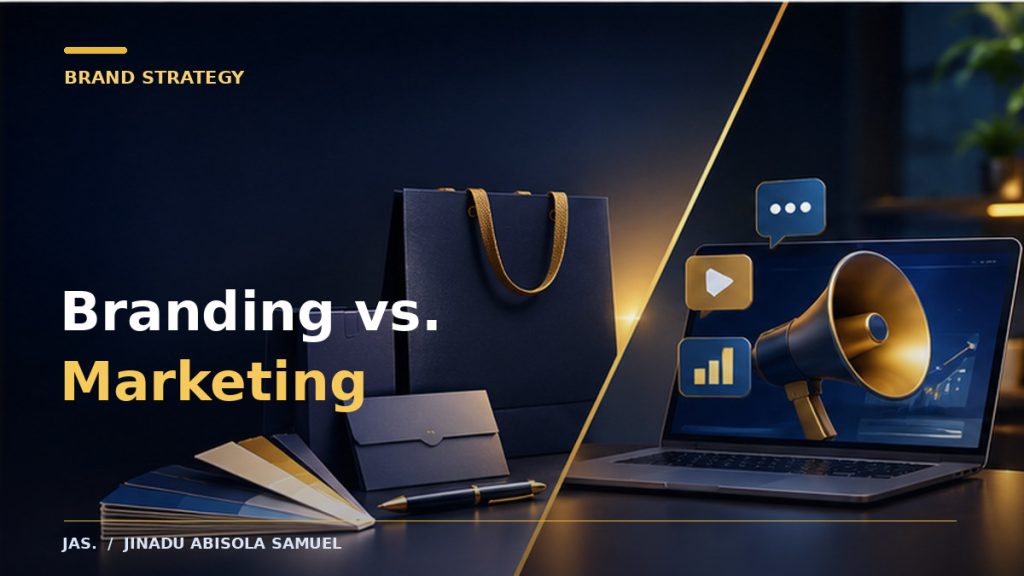
Entrepreneurs sometimes use “branding” and “marketing” as though they mean the same thing. They are connected, but they solve different problems. Understanding the difference can prevent a business from spending money on campaigns before its message is clear.
A simple way to think about it is this: branding shapes what people understand and expect from your business; marketing helps the right people discover and consider your offer. Both need to be supported by genuine service quality.
What is branding?
Branding is the deliberate work of defining how a business presents itself and how it wants to be remembered. It includes positioning, the customer promise, tone of voice, visual identity and the experience people receive.
A logo is a useful identifier, but it is only one part of that system. Two businesses can use similar colours and fonts yet feel very different because they communicate, price, deliver and respond to customers differently.
What is marketing?
Marketing is the work of connecting an offer to potential customers. It can include research, messaging, content, search visibility, advertising, email, partnerships and conversion improvements.
A successful campaign brings attention. But attention alone does not mean a person trusts the business or understands what makes it worth choosing.
Branding and marketing: a practical comparison
- Branding asks: Who are we, who do we serve, and what should customers expect?
- Marketing asks: Where can we reach those customers and what will motivate them to act?
- Branding builds: identity, clarity, consistency and recognition.
- Marketing drives: awareness, enquiries, trials, purchases and repeat engagement.
A simple example: a growing service business
Imagine a small company offering property maintenance services. It has attractive social posts but gives different prices and descriptions depending on who answers the phone. Customers may notice the content, but the inconsistent experience creates doubt.
Branding work would clarify its service promise, target customer, tone, quotation style and visual materials. Marketing would then use relevant articles, local search, referrals or advertisements to introduce those services to suitable customers.
The two functions reinforce one another: marketing creates opportunities to be noticed, while a credible brand experience helps those opportunities become lasting relationships.
Five brand questions to answer before your next campaign
- Who exactly is the customer? Avoid trying to speak to everyone at once.
- What problem do we solve? Explain the outcome in practical language.
- Why should anyone believe us? Use genuine work, qualifications, process and approved feedback.
- What should customers do next? Make the enquiry or purchase path obvious.
- Can we deliver consistently? A promise is only useful when operations support it.
How to allocate effort when your budget is limited
If you are just starting, begin with customer understanding, a clear offer, consistent basic branding and an accessible enquiry route. You do not need an elaborate identity manual before you have validated demand.
If enquiries are coming in but people seem confused about your offer, revisit the message and customer experience. If your offer and delivery are clear but few suitable customers know you exist, it may be time to test stronger marketing distribution.
Common mistakes to avoid
- Buying a logo package without defining the customer or offer.
- Running paid advertisements to a confusing landing page.
- Changing brand colours and messages every few weeks.
- Assuming a large follower count proves trust or sales.
- Making performance promises that cannot be substantiated.
Final thought
Your brand should make the business easier to recognise and understand. Your marketing should make it easier for the right customers to find you. Work on both, but do not forget the third piece: delivering the experience you promise.
Need practical guidance tailored to your business? I work with entrepreneurs and organisations on business strategy, websites, digital marketing and technology solutions. Start a consultation enquiry or explore selected projects.

Jinadu Abisola Samuel
Founder & CEO of TheMainCEOs. I share practical perspectives on entrepreneurship, digital business, technology and professional growth.